Adia
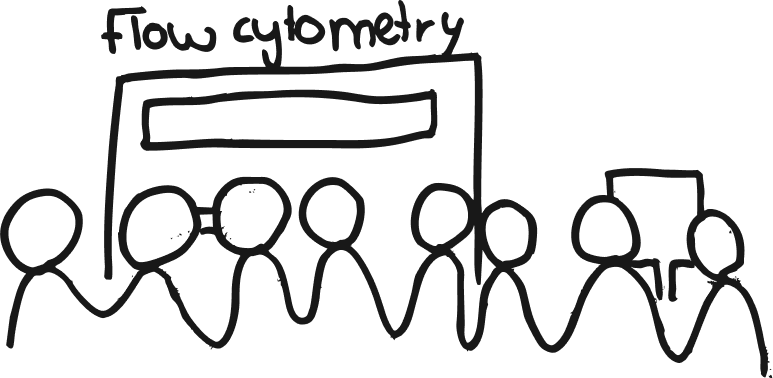
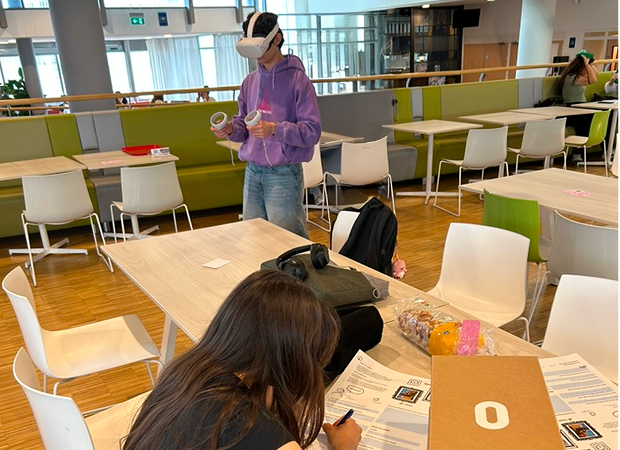
Adia and a friend were waiting in the Randwijck canteen, where they had 2 hours to kill before their lecture. We had cookies, stroopwafels and an opportunity for distraction. A match made in heaven!
Who is Adia?

Caring
Extrovert
Patient
Adventurous
Adia
Studies Biomedical Sciences
21 years old
From Afghanistan
“People appreciate my patience and outgoingness.”

Brainstorming
In order to gather valuable stories and insights to shape our VR solution, we had to collect a little more information on the students’ curriculum. What do they do exactly, what drives them, and what do they think is lacking? Finding out their wants and needs. We guided participants with and without VR experience in exploring different applications and had them share their thoughts through guided questions and a short brainstorm. Here is a short passage:
"Now that you've tried some VR, which course do you think could really benefit from it?"

"Honestly, a lot of courses could be improved like biology, where we could use VR to look inside the body and explore cells in 3D."
"What kind of environment would help you the most?"

"Maybe a quiet beach or a peaceful library, where I can focus, write down my goals, and check in without feeling rushed or judged."
Let's get drawing
We believe that drawing helps unleash creativity that might not come up otherwise. We asked them to think of their wildest VR-dreams. Even though we kept getting the same reaction, “I can’t draw!”, they thought up fascinating and innovative ideas. Afterwards, we analyzed the drawings and sketches, and based on them, we created new illustrations that tell the story they wanted to express. The sketches weren’t the final result, but a tool to spark creativity. If you would like to see the drawing Adia made, click here.

Inside Adia's imagination
Course Adia believes needs change: Mentoring track
The mentoring track helps students stay on track by setting learning goals and tracking their progress with guidance from a professor or mentor.

This course aims to help students with support from a professor or mentor. However, many students currently find it difficult and experience the track as unhelpful and frustrating. Like sisyphos pushing a boulder uphill, they struggle to keep up.
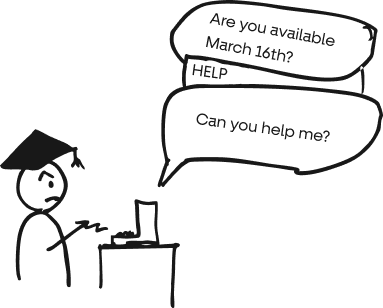
It’s challenging for students to reach the mentor and successfully arrange a meeting, which can lead to delays in getting feedback or guidance.

On the other side there is a professor or tutor who's very busy and doesn't have that much time. This is an extra activity for them to do beside their jobs, resulting in sessions where everything is quickly handled. But sometimes the students wish for more time/help.

The solution: A VR experience where the students can choose their own environment, like a relaxing beach or quiet library, and the students can go in on their own accord (or planned sessions) and keep track of their progress in a little booklet (or something else of choice, as long as they can write something on it). The mentor could see the environment as well, and go in on their own accord too or plan sessions with the student.

Long story short
What if students could reflect on their progress and connect with mentors whenever and wherever they feel most at ease? Instead of rushed meetings squeezed between busy schedules, students can step into a calm, personalized VR space one that invites focus, reflection, and meaningful connection. By creating a VR experience where students can set learning goals, track their progress, and meet with mentors in an environment they choose, we open the door to active autonomy. They decide when to check in, where they want to be, and how they want to work. In this immersive space, distractions fade, and motivation has room to grow. Somewhere they can write in a virtual journal, revisit their goals, or reflect without judgment. And because it’s all in VR, mentors can join too whether in a planned session or spontaneously sharing the same virtual setting. This shared remote presence helps build connection, even from a distance.
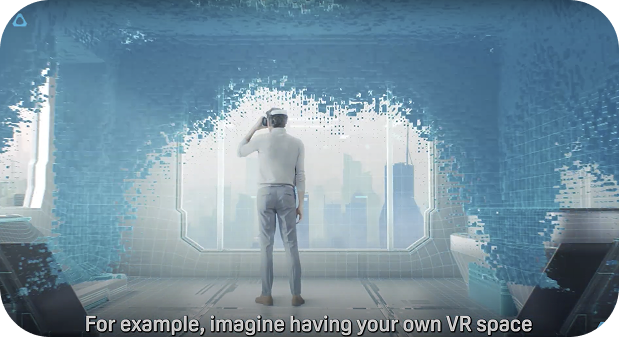
While researching, we found an app that really resonated with Adia's idea.
The app VIVE Talk reimagines journaling through VR, turning thoughts and memories into immersive and multidimensional experiences. It’s a great example of how VR can create a personalized space for reflection and connection.